Difference between revisions of "The Cauldron"
| Line 289: | Line 289: | ||
==== System Components: ==== | ==== System Components: ==== | ||
x1 [[planetoid belt]], no other significant [[World|bodies]]. | x1 [[planetoid belt]], no other significant [[World|bodies]]. | ||
| − | * The | + | * The minute primary [[star]] is surrounded by a broad [[planetoid belt]] made up of tiny particles (typically massing less than a [[Gram (metric)|gram]]) containing a relatively high percentage of frozen volatiles. |
The [[planetoid belt|belt]] orbiting the [[star]] is nominally the [[mainworld]]. | The [[planetoid belt|belt]] orbiting the [[star]] is nominally the [[mainworld]]. | ||
Revision as of 08:16, 9 July 2019
The Cauldron Nebula is a reflection nebula located within the heart of Cauldron Sector, within the Where The Stars End region of the Empty Stars.
- It is an astrographic feature and a nebula.
- It is part of Uncharted Space.

Description (Specifications)
The Cauldron nebula is a large group of bright nebulae and dark clouds measuring around 20 parsecs coreward-rimward by 15 parsecs spinward-trailing.
- It is classified as a reflection nebula and is primarily formed of ionized gases, thrown off by the giant stars at its center many millennia ago.
- The gases consist of about 90% molecular hydrogen (H2), with the remainder made up of varying concentrations of helium (He), oxygen (O2), nitrogen (N2), and other elements. The clouds have a mean density of 102–106 particles/cm³.
It is considered to contain 26 separate stars of varying ages grouped into ten separate star systems. These include x2 Bright Giants, x6 Giants, x5 Subgiants, x11 Main Sequence, x1 Subdwarf, and x7 Dwarfs.
Image Repository
The systems at the heart of the Cauldron nebula.

Garazal System
Hex location: Cauldron Sector 1720
Garazal has three stars in the star system. Garazal 
Type Category Mass (Sol) Temperature (K) Luminosity G4 IV Subgiant 1.95 4800 - 5700 5.22 Unit Diameter Safe Distance Habitable Zone Jump Shadow M-Drive Limit AU 0.0255 0.1895 1.82 - 2.96 2.55 25.5 Orbit # * 0 5 5 8 Remarks None Garazal 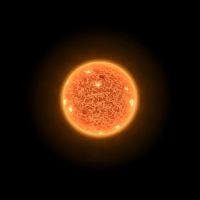
Type Category Mass (Sol) Temperature (K) Luminosity M0 V Main Sequence (Dwarf) 0.57 3770 - 3850 0.13982 Unit Diameter Safe Distance Habitable Zone Jump Shadow M-Drive Limit AU 0.0055 0.031 0.39 - 0.74 0.55 5.5 Orbit # * * 2 1 6 Remarks Orbits primary at 2200 AU. Flare Star Garazal
Type Category Mass (Sol) Temperature (K) Luminosity M1 V Main Sequence (Dwarf) 0.5 3620 - 3660 0.08839 Unit Diameter Safe Distance Habitable Zone Jump Shadow M-Drive Limit AU 0.0047 0.0247 0.31 - 0.59 0.47 4.7 Orbit # * * 1 1 6 Remarks Orbits secondary at 0.7 AU. Flare Star

System Diagram:
A basic astrographic chart of the Garazal system, lying in the the heart of the Cauldron Nebula.

System Components:
x4 planetoid belts, no other significant bodies.
- Three vast belts, made up of fine particles and divided by ill-defined transition zones, lie around the primary star. The inner belt is largely made up of metallic and stony materials, the outer belt contains a higher percentage of frozen volatiles, while the middle transition zone belt is a mixture of the two and contains the largest individual bodies, some weighing as much as a few grams.
- A broad belt made up of fine particles orbits the distant binary pair companion stars.
The transition zone belt orbiting the primary star is nominally the mainworld.
- Mainworld UWP: ?000???-? As Va
Astrograpic Dangers
The Garazal system is considered a hazard to navigation and health and is classified as a Red Zone:
- A miasma of molecular particles sleets through the system. This interferes with communications and sensors.
- Occasionally, a particularly dense pocket of material may gain enough static charge to trigger a powerful plasma discharge.
- Radiation levels within the inner system are significantly elevated, rising to as high as 300 Rads per hour.
- Both of the companion stars are Flare Stars and are active EM transmitters.
Hergan System
Hex location: Cauldron Sector 1721
| Hergan | ||||||
|---|---|---|---|---|---|---|

|
Type | Category | Mass (Sol) | Temperature (K) | Luminosity | |
| M3 III | Giant | 6.96 | 2300 - 3100 | 1556 | ||
| Unit | Diameter | Safe Distance | Habitable Zone | Jump Shadow | M-Drive Limit | |
| AU | 1.5074 | 3.27182 | 31.36 - 51.12 | 150.74 | 1507.4 | |
| Orbit # | 4 | 5 | 9 | 11 | 14 | |
| Remarks | None | |||||
| Hergan | ||||||

|
Type | Category | Mass (Sol) | Temperature (K) | Luminosity | |
| K0 IV | Subgiant | 2.3 | 4000 - 5000 | 4.67 | ||
| Unit | Diameter | Safe Distance | Habitable Zone | Jump Shadow | M-Drive Limit | |
| AU | 0.03071 | 0.17924 | 1.72 - 2.8 | 3.071 | 30.71 | |
| Orbit # | * | 0 | 5 | 5 | 9 | |
| Remarks | Orbits primary at 4.8 AU | |||||
System Diagram:
A basic astrographic chart of the Hergan system, lying in the the heart of the Cauldron Nebula.

System Components:
x2 planetoid belts, x3 small gas giants, no other significant bodies.
- The two stars orbit a barycenter and the region of space immediately around the pair is relatively clear. Two vast distinct belts lie around the stars. The inner belt is largely made up of metallic and stony materials with a maximum mass of around a gram, while the outer belt contains finer particles with a higher percentage of frozen volatiles. Beyond them are three small spectacularly ringed gas giant worlds, all lacking moons and with eccentric, unstable orbits.
The outer belt (specifically the inner edge of that belt) is nominally the mainworld.
- Mainworld UWP: ?000???-? As Va
Astrograpic Dangers
The Hergan system is considered a hazard to navigation and health and is classified as a Red Zone:
- A miasma of molecular particles sleets through the system. This interferes with communications and sensors.
- Occasionally, a particularly dense pocket of material may gain enough static charge to trigger a powerful plasma discharge.
- Radiation levels within the inner system are significantly elevated, rising to as high as 150 Rads per hour.
Izix System
Hex location: Cauldron Sector 1818
Izix has four stars in the star system. Izix 
Type Category Mass (Sol) Temperature (K) Luminosity A2 II Bright Giant 12.8 8600 - 9400 1660 Unit Diameter Safe Distance Habitable Zone Jump Shadow M-Drive Limit AU 0.1526 3.3794 32.39 - 52.8 15.26 152.6 Orbit # 0 5 9 8 11 Remarks None Izix 
Type Category Mass (Sol) Temperature (K) Luminosity K1 III Giant 4.2 3800 - 4800 140 Unit Diameter Safe Distance Habitable Zone Jump Shadow M-Drive Limit AU 0.19726 0.98141 9.41 - 15.33 19.726 197.26 Orbit # 0 3 7 8 11 Remarks Orbits primary at 150 AU Izix
Type Category Mass (Sol) Temperature (K) Luminosity M8 V Main Sequence (Dwarf) 0.085 2420 - 2570 0.00018 Unit Diameter Safe Distance Habitable Zone Jump Shadow M-Drive Limit AU 0.0011 0.0011 0.01 - 0.03 0.11 1.1 Orbit # * * * 0 3 Remarks Orbits secondary at 3 AU. Flare Star Izix 
Type Category Mass (Sol) Temperature (K) Luminosity D White Dwarf 0.53 6800 - 6800 0 Unit Diameter Safe Distance Habitable Zone Jump Shadow M-Drive Limit AU 0.00011 0.00168 0 - 0.03 0.011 0.11 Orbit # * * * * 0 Remarks Orbits primary at 900 AU


System Diagram:
A basic astrographic chart of the Izix system, lying in the the heart of the Cauldron Nebula.

System Components:
x4 planetoid belts, x3 small gas giants, no other significant bodies.
- Two vast belts made up of fine particles lie around the primary star. The inner belt is largely made up of metallic and stony materials while the outer belt contains a higher percentage of frozen volatiles. Beyond them are two small spectacularly ringed gas giant worlds, both lacking moons and with eccentric, unstable orbits.
- The secondary and tertiary stars are a binary pair that orbit a barycenter and in turn orbit the primary. They are surrounded by a broad planetoid belt made up of fine particles and a small spectacularly ringed gas giant with a gradually decaying orbit.
- The system fringe is marked by a tiny white dwarf star that retains a broad belt made up of fine particles.
The inner edge of the outer belt orbiting the primary star is nominally the mainworld.
- Mainworld UWP: ?000???-? As Va
Astrograpic Dangers
The Izix system is considered a hazard to navigation and health and is classified as a Red Zone:
- A miasma of molecular particles sleets through the system. This interferes with communications and sensors.
- Occasionally, a particularly dense pocket of material may suffer a plasma discharge.
- Radiation levels within the inner system are significantly elevated, rising to as high as 200 Rads per hour.
- The small dim red Far Companion B is a violent Flare Star and is an active EM transmitter.
Kuruhuk System
Hex location: Cauldron Sector 1819
Kuruhuk has three stars in the star system. Kuruhuk 
Type Category Mass (Sol) Temperature (K) Luminosity F7 IV Subgiant 1.9 5800 - 6500 9.8 Unit Diameter Safe Distance Habitable Zone Jump Shadow M-Drive Limit AU 0.02382 0.25966 2.49 - 4.06 2.382 23.82 Orbit # * 0 5 5 8 Remarks None Kuruhuk 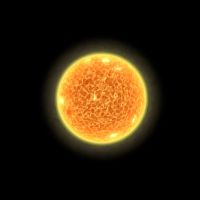
Type Category Mass (Sol) Temperature (K) Luminosity K1 V Main Sequence (Dwarf) 0.86 5100 - 5170 0.58985 Unit Diameter Safe Distance Habitable Zone Jump Shadow M-Drive Limit AU 0.0074 0.0637 0.76 - 1.36 0.74 7.4 Orbit # * * 3 2 6 Remarks Orbits primary at 2.8 AU Kuruhuk
Type Category Mass (Sol) Temperature (K) Luminosity D White Dwarf 0.53 6800 - 6800 0 Unit Diameter Safe Distance Habitable Zone Jump Shadow M-Drive Limit AU 0.00011 0.00168 0 - 0.03 0.011 0.11 Orbit # * * * * 0 Remarks Orbits secondary at 0.4 AU


System Diagram:
A basic astrographic chart of the Kuruhuk system, lying in the the heart of the Cauldron Nebula.

System Components:
x4 planetoid belts, x3 small gas giants, no other significant bodies.
- Two belts lie within the primary star's inner system. The vast inner belt is largely made up of metallic and stony particles with a maximum mass of around a gram, while the denser outer belt contains principally stony bodies with a maximum mass of around a kilogram.
- The secondary and tertiary stars are a binary pair that orbit a barycenter located in the primary stars habitable zone.
- The outer system consists of a stony planetoid belt containing bodies with a maximum mass of around a kilogram, a small spectacularly ringed gas giant, a broad belt made up of very fine particles containing a high percentage of frozen volatiles, and beyond that two small ringed gas giant worlds. All of the gas giants lack moons and have eccentric, unstable orbits.
The stony belt orbiting the primary star in the outer system is nominally the mainworld.
- Mainworld UWP: ?000???-? As Va
Astrograpic Dangers
The Kuhuruk system is considered a hazard to navigation and health and is classified as a Red Zone:
- A miasma of molecular particles sleets through the system. This interferes with communications and sensors.
- Occasionally, a particularly dense pocket of material may suffer a plasma discharge.
- Radiation levels within the inner system are significantly elevated, rising to as high as 200 Rads per hour.
Oskorok System
Hex location: Cauldron Sector 1822
Oskorok has a solitary primary star. Oskorok
Type Category Mass (Sol) Temperature (K) Luminosity K4 V Main Sequence (Dwarf) 0.73 4440 - 4600 0.33238 Unit Diameter Safe Distance Habitable Zone Jump Shadow M-Drive Limit AU 0.0066 0.0478 0.58 - 1.07 0.66 6.6 Orbit # * * 2 2 6 Remarks None
System Diagram:
A basic astrographic chart of the Oskorok system, lying in the the heart of the Cauldron Nebula.

System Components:
x2 planetoid belts, x4 gas giants, no other significant bodies.
- A vast belt made up of fine particles massing no more than a gram straddles the inner orbits around the primary star. The inner region of the belt is largely made up of metallic and stony materials while the outer belt region contains a higher percentage of frozen volatiles. Beyond it is a small ringed gas giant and a vastly swollen large ringed gas giant. An outer belt, composed of a mixture of rocky and icy chunks massing as much a few kilograms, lies beyond them, and two small spectacularly ringed gas giants form the system fringe. All of the gas giant worlds have eccentric, unstable orbits and none retain moons.
The inner edge of the inner belt is nominally the mainworld.
- Mainworld UWP: ?000???-? As Va
Astrograpic Dangers
The Oskorok system is considered a hazard to navigation and health and is classified as a Red Zone:
- A miasma of molecular particles sleets through the system. This interferes with communications and sensors.
- Occasionally, a particularly dense pocket of material may suffer a plasma discharge.
- Radiation levels within the system are significantly elevated, rising to as high as 50 Rads per hour.
Tharakh System
Hex location: Cauldron Sector 1920
Tharakh has three stars in the star system. Tharakh
Type Category Mass (Sol) Temperature (K) Luminosity K1 III Giant 4.2 3800 - 4800 140 Unit Diameter Safe Distance Habitable Zone Jump Shadow M-Drive Limit AU 0.19726 0.98141 9.41 - 15.33 19.726 197.26 Orbit # 0 3 7 8 11 Remarks None Tharakh
Type Category Mass (Sol) Temperature (K) Luminosity M0 V Main Sequence (Dwarf) 0.57 3770 - 3850 0.13982 Unit Diameter Safe Distance Habitable Zone Jump Shadow M-Drive Limit AU 0.0055 0.031 0.39 - 0.74 0.55 5.5 Orbit # * * 2 1 6 Remarks Orbits primary at 1 AU Tharakh
Type Category Mass (Sol) Temperature (K) Luminosity D White Dwarf 0.53 6800 - 6800 0 Unit Diameter Safe Distance Habitable Zone Jump Shadow M-Drive Limit AU 0.00011 0.00168 0 - 0.03 0.011 0.11 Orbit # * * * * 0 Remarks Orbits secondary at 0.2 AU
System Diagram:
A basic astrographic chart of the Tharakh system, lying in the the heart of the Cauldron Nebula.

System Components:
x2 planetoid belts, x4 gas giants, no other significant bodies.
- The giant primary is a turbulent star that is an active EM transmitter. The two companion stars orbit a barycenter located at around 1 AU and the region of space immediately around the three stars is relatively clear. The inner belt is largely made up of metallic and stony materials with a maximum mass of around a kilogram, and beyond it are three small ringed gas giant worlds, all lacking moons and with eccentric, unstable orbits. Beyond them is a broad outer belt made up of tiny particles (typically massing less than a gram) and containing a relatively high percentage of frozen volatiles. A very large ringed gas giant, possibly a captured rogue world, orbits on the outer fringe of the system.
The inner belt (specifically the outermost edge of that belt) is nominally the mainworld.
- Mainworld UWP: ?000???-? As Va
Astrograpic Dangers
The Tharakh system is considered a hazard to navigation and health and is classified as a Red Zone:
- A miasma of molecular particles sleets through the system. This interferes with communications and sensors.
- Occasionally, a particularly dense pocket of material may gain enough static charge to trigger a powerful plasma discharge.
- Radiation levels within the inner system are significantly elevated, rising to as high as 200 Rads per hour.
- The primary star is an EM transmitter, broadcasting extremely strong signals on a variety of wavelengths.
Crendar System
Hex location: Cauldron Sector 1922
| Crendar | ||||||
|---|---|---|---|---|---|---|
|
|
Type | Category | Mass (Sol) | Temperature (K) | Luminosity | |
| M2 III | Giant | 6.74 | 2400 - 3300 | 1194 | ||
| Unit | Diameter | Safe Distance | Habitable Zone | Jump Shadow | M-Drive Limit | |
| AU | 1.20034 | 2.86607 | 27.47 - 44.78 | 120.034 | 1200.34 | |
| Orbit # | 3 | 5 | 9 | 11 | 14 | |
| Remarks | None | |||||
| Crendar | ||||||

|
Type | Category | Mass (Sol) | Temperature (K) | Luminosity | |
| M1 V | Main Sequence (Dwarf) | 0.5 | 3620 - 3660 | 0.08839 | ||
| Unit | Diameter | Safe Distance | Habitable Zone | Jump Shadow | M-Drive Limit | |
| AU | 0.0047 | 0.0247 | 0.31 - 0.59 | 0.47 | 4.7 | |
| Orbit # | * | * | 1 | 1 | 6 | |
| Remarks | Orbits primary at 40 AU | |||||
System Diagram:
A basic astrographic chart of the Crendar system, lying in the the heart of the Cauldron Nebula.

System Components:
x3 planetoid belts, x1 gas giant, no other significant bodies.
- The giant primary is a turbulent star that is an active EM transmitter. It is surrounded by a vast inner belt made up up of metallic and stony materials with a maximum mass of around a gram. A second stony belt lies further out from the star, made up of largely stony materials with a maximum mass of around a kilogram.
- The companion star is surrounded by a broad planetoid belt. The inner transition region of the belt is made up of metallic and stony materials with a maximum mass of around a kilogram, while the outer part of belt is made up of tiny particles (typically massing less than a gram) and containing a relatively high percentage of frozen volatiles. A small ringed gas giant world that lacks moons and has an eccentric, unstable orbit marks the system fringe.
The inner region of the belt orbiting the companion star is nominally the mainworld.
- Mainworld UWP: ?000???-? As Va
Astrograpic Dangers
The Crendar system is considered a hazard to navigation and health and is classified as a Red Zone:
- A miasma of molecular particles sleets through the system. This interferes with communications and sensors.
- Occasionally, a particularly dense pocket of material may gain enough static charge to trigger a powerful plasma discharge.
- Radiation levels within the inner system are significantly elevated, rising to as high as 200 Rads per hour.
- The primary star is an EM transmitter, broadcasting extremely strong signals on a variety of wavelengths.
Kruhl System
Hex location: Cauldron Sector 1923
Kruhl has three stars in the star system. Kruhl
Type Category Mass (Sol) Temperature (K) Luminosity F0 IV Subgiant 2.5 6900 - 7400 19 Unit Diameter Safe Distance Habitable Zone Jump Shadow M-Drive Limit AU 0.02512 0.36154 3.47 - 5.65 2.512 25.12 Orbit # * 1 6 5 8 Remarks None Kruhl
Type Category Mass (Sol) Temperature (K) Luminosity G0 IV Subgiant 1.75 5400 - 6100 6.5 Unit Diameter Safe Distance Habitable Zone Jump Shadow M-Drive Limit AU 0.02326 0.21147 2.03 - 3.3 2.326 23.26 Orbit # * 0 5 5 8 Remarks Orbits primary at 0.7 AU Kruhl
Type Category Mass (Sol) Temperature (K) Luminosity M2 V Main Sequence (Dwarf) 0.44 3470 - 3560 0.0565 Unit Diameter Safe Distance Habitable Zone Jump Shadow M-Drive Limit AU 0.0041 0.0197 0.25 - 0.48 0.41 4.1 Orbit # * * 1 1 6 Remarks Orbits primary at 950 AU
System Diagram:
A basic astrographic chart of the Kruhl system, lying in the the heart of the Cauldron Nebula.

System Components:
x2 planetoid belts, x2 gas giants, no other significant bodies.
- The primary and the companion stars are a binary pair orbiting a barycenter. A hot gas giant orbits very close to the companion star and material evaporated from its boiling atmosphere streams back through the system. A broad planetoid belt lies beyond the two stars. The inner region of the belt is made up of metallic and stony materials with a maximum mass of around a kilogram, the outer region of the belt is made up of tiny particles (typically massing less than a gram) and containing a relatively high percentage of frozen volatiles, while its transition zone, straddling the habitable zone, is a mixture of the two. A small ringed gas giant world that lacks moons and has an eccentric, unstable orbit marks the system fringe.
- The companion star is surrounded by a broad planetoid belt is made up of tiny particles (typically massing less than a gram) and containing a relatively high percentage of frozen volatiles.
The belt orbiting the primary stars is nominally the mainworld.
- Mainworld UWP: ?000???-? As Va
Astrograpic Dangers
The Kruhl system is considered a hazard to navigation and health and is classified as a Red Zone:
- A miasma of molecular particles sleets through the system. This interferes with communications and sensors.
- Occasionally, a particularly dense pocket of material may gain enough static charge to trigger a powerful plasma discharge.
- Radiation levels within the inner system are significantly elevated, rising to as high as 200 Rads per hour.
Ryzak System
Hex location: Cauldron Sector 2021
Ryzak has a solitary primary star. Ryzak
Type Category Mass (Sol) Temperature (K) Luminosity D White Dwarf 0.53 6800 - 6800 0 Unit Diameter Safe Distance Habitable Zone Jump Shadow M-Drive Limit AU 0.00011 0.00168 0 - 0.03 0.011 0.11 Orbit # * * * * 0 Remarks None
System Diagram:
A basic astrographic chart of the Ryzak system, lying in the the heart of the Cauldron Nebula.

System Components:
x1 planetoid belt, no other significant bodies.
- The minute primary star is surrounded by a broad planetoid belt made up of tiny particles (typically massing less than a gram) containing a relatively high percentage of frozen volatiles.
The belt orbiting the star is nominally the mainworld.
- Mainworld UWP: ?000???-? As Va
Astrograpic Dangers
The Ryzak system is considered a hazard to navigation and health and is classified as a Red Zone:
- A miasma of molecular particles sleets through the system. This interferes with communications and sensors.
- Occasionally, a particularly dense pocket of material may gain enough static charge to trigger a powerful plasma discharge.
- Radiation levels within the inner system are significantly elevated, rising to as high as 200 Rads per hour.
Seruk System
Hex location: Cauldron Sector 2122, 2 Gas Giants
Seruk has three stars in the star system. Seruk 
Type Category Mass (Sol) Temperature (K) Luminosity A3 III Giant 10.2 8400 - 9100 166 Unit Diameter Safe Distance Habitable Zone Jump Shadow M-Drive Limit AU 0.04876 1.06866 10.24 - 16.7 4.876 48.76 Orbit # * 3 7 6 9 Remarks None Seruk 
Type Category Mass (Sol) Temperature (K) Luminosity F7 V Main Sequence (Dwarf) 1.21 6180 - 6280 1.94872 Unit Diameter Safe Distance Habitable Zone Jump Shadow M-Drive Limit AU 0.0123 0.1158 1.29 - 2.24 1.23 12.3 Orbit # * 0 4 3 7 Remarks Orbits primary at 2000 AU Seruk
Type Category Mass (Sol) Temperature (K) Luminosity D White Dwarf 0.53 6800 - 6800 0 Unit Diameter Safe Distance Habitable Zone Jump Shadow M-Drive Limit AU 0.00011 0.00168 0 - 0.03 0.011 0.11 Orbit # * * * * 0 Remarks Orbits secondary at 10 AU


Astrograpic Dangers
The Syrak system is considered a hazard to navigation and health and is classified as a Red Zone:
- A miasma of molecular particles sleets through the system. This interferes with communications and sensors.
- Occasionally, a particularly dense pocket of material may gain enough static charge to trigger a powerful plasma discharge.
- Radiation levels within the inner system are significantly elevated, rising to as high as 200 Rads per hour.
History & Background (Dossier)
The positions and types of the stars present within The Cauldron have been cataloged as part of the University of Tal Varisa Deep Sky Program.
- A secret annex to the DSP Listing includes detailed astrograpic information about the Cauldron nebula. It forms the basis of information presented within this article.
A note within the Zelig Journal indicates that one or more scout vessels of the Last Armada may have journeyed into The Cauldron as they passed through the Cauldron Cluster.
Image Repository
Worlds & Sectors (Astrography)
This astrographic feature is primarily found in the following areas:
Uncharted Space:
World Listing: 1105
The following systems and worlds are associated with this astrographic feature:
References & Contributors (Sources)

|
This article is missing content for one or more detailed sections. Additional details are required to complete the article. You can help the Traveller Wiki by expanding it. |
- Traveller Wiki Editorial Team
- Author & Contributor: Lord (Marquis) and Master Scout Emeritus Adie Alegoric Stewart of the IISS
- Author & Contributor: WHULorigan
- Author & Contributor: Lord (Marquis) and Master of Sophontology Maksim-Smelchak of the Ministry of Science