Viariat (world)
| Viariat/Bilahew (Fulani 1710) | |||||||||||||||||||||||||
| Classic Era (1116) | D000744-9
| ||||||||||||||||||||||||
| See also | UWP | ||||||||||||||||||||||||
| System Details | |||||||||||||||||||||||||
| Primary | M3 V | ||||||||||||||||||||||||
| Planetoid Belts | 2 | ||||||||||||||||||||||||
| Gas Giants | 0 | ||||||||||||||||||||||||
Viariat is a ring of many small worldlets (planetoids AKA an "asteroid belt"), not capable of retaining an atmosphere or water, and both non-agricultural and preindustrial in nature.
- These worldlets warrant hazardous environment precautions.
- Life in a vacuum requires great discipline. After all, it only takes one forgotten seal on a vacuum suit to spell death. Those who survive tend to be very methodically-minded and attentive to small detail.
- The worldlets are, for the most part, unable to produce quality foodstuffs and must import them.
- These worldlets are working towards being an industrial world but lack an adequate workforce to do so.
- It is a Non-Aligned world dominated by indigenous Sophonts located in the Bilahew Subsector of Fulani Sector.
- This is a hot world, with a climate of high temperatures.
- It is the former homeworld of the Esishiai.
Description (Astrography & Planetology)
In the year 332 an as-yet unexplained phenomenon, seemingly triggered by an uncharacteristic and gigantic bout of stellar activity and a conjunction of the worlds of the system, caused the partial disintegration of the two innermost planets, transforming them from spherical bodies into very sparse planetoid belts.
- It has been suggested that the two former inner worlds briefly but rapidly changed their orbital distances before being jockeyed back into position by tidal and gravitational forces.
- The intense gravitational trauma this caused was enough to trigger extreme geological activity powerful enough for the worlds to cast off much of their surface material.
- One of these two worlds was the Esishiai homeworld.

Scientists and authorities on the subject vehemently counter this, pointing out the unimaginable magnitude of the forces required to cause this effect, the impossibility of the star system maintaining its stability should such an event have occurred, and the fact that in thousands upon thousands of simulations the effect has proven unrepeatable. The mathematics simply do not work.
The terrifying truth is that nobody has any idea what actually happened.
While their massive cores continue to orbit, the mantles and crusts of the two former planets form narrow planetoid belts around the star.
- The cores of the worlds attract planetoid material as they orbit, which continuously falls back onto their surfaces.
- Occasionally a really big chunk impacts on one of the cores, creating a massive molten crater.
Viariat has a solitary primary star. Viariat 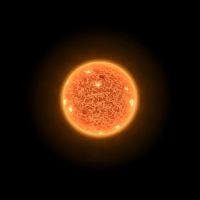
Type Category Mass (Sol) Temperature (K) Luminosity M3 V Main Sequence (Dwarf) 0.37 3270 - 3430 0.03081 Unit Diameter Safe Distance Habitable Zone Jump Shadow M-Drive Limit AU 0.0034 0.0146 0.18 - 0.35 0.34 3.4 Orbit # * * 0 1 5 Remarks Unusually stable star displaying almost no flare activity.


System Data
The worlds of the system have been surveyed. They consist of:
- The mainworld, an asteroid belt located within the deep inner system.
- x7 secondary rocky worlds, consisting of four inner system worlds and three outer system worlds.
- x2 planetoid belts, one located within the deep inner system, and one lying on the frozen outer fringe of the system.
Prior to the year 332, the system consisted of the mainworld, x8 secondary rocky worlds, and x1 planetoid belt lying in the outer system.
Inner System
The inner planetoid belt, the mainworld belt, and the four inner worlds of the system have an orbital resonance of 17:12:8:5:3:2 with one another.
They straddle the stars narrow habitable zone, lying across classic orbits 0, 1, and 2.
- One planetoid belt and the mainworld asteroid belt form the innermost part of the system. They orbit at mean distances of 0.08 AU and 0.12 AU respectively.
- Both belts are shattered former tidally locked worlds.
- Their massive cores continue to orbit, maintaining and balancing the orbital resonance, while the material of their mantles and crusts forms the belts.
- The asteroid belt lying at 0.12 AU is designated the mainworld.
- The four innermost worlds orbit at 0.20 AU, 0.32 AU, 0.48 AU, and 0.68 AU respectively.
- The inner pair of worlds are tidally locked to the star. Both worlds have long-term settlements located on them.
Outer System
Two of the three outer rocky worlds are Gas Dwarfs, huge planets that retain gigantic hydrogen-rich atmospheres.
- They are so-called "failed Neptune" worlds that were unable to gather enough material during their formation to become a small gas giant (SGG).
- Their gigantic atmospheres are thousands of kilometers thick, containing a large amount of hydrogen and with extremely high surface pressures.
The third outer world is a frozen iceball orbiting on the fringe of the system. Beyond it lies a vast but extremely ephemeral icy planetoid belt.
Mainworld Data
The mainworld is a shattered former planet.
Mainworld Size (S)
Viariat is an Asteroid Belt consisting of a few very large objects with diameters of hundreds of kilometers, thousands of bodies of a few kilometers in diameter, and millions of smaller objects.
- Asteroid Belt is the belt when it is the mainworld of a system.
- Planetoid Belt refers to any non-mainworld belt within a system.
- The hot core of the shattered planet remains as a distinct body within the planetoid belt. It has a UWP of X210000-0.
Mainworld Atmosphere (A)
Only one of the bodies within the Viariat belt retain an atmosphere.
- The belt is in vacuum conditions, requiring the use of a Vacc Suit.
- TL–8 or more advanced survival gear is required to settle this world.
Mainworld Hydrosphere (H)
The Viariat belt contains a few icy bodies. A few belt objects have frozen volatiles on their surfaces.
- Wilderness refueling is possible within the belt, provided a suitable icy object can be found.
Mainworld Geography and Topography
No information yet available.
Native Lifeforms
No surviving native life.
History & Background (Dossier)
No information yet available.
World Starport (St)
Viariat has a Class D Starport, a poor quality installation which has few of the expected amenities. There is unrefined fuel for starships and a limited variety of ship provisions. There is no shipyard of any kind, but there may be parts and technical support for doing minor services and repair. Ports of this classification generally consist of only a downport, unless this is a trade port or system with an hostile environment mainworld.
Facilities
Port facilities within the system include:
- No information yet available.
World Technology Level (T)
Viariat possesses a Technology Level of TL–9.
- Common Communication technologies for this TL include: Fiber optics and satellite communication and data networks.
- Common Power Generation technologies for this TL include: Early fusion power.
- Common Transportation technologies for this TL include:
- Land: Ultra high-speed trains and early grav vehicles.
- Water: High efficiency sailcraft, multihulled seacraft, improved artificial gills.
- Air: Tiltrotorcraft, exotic VTOL's, PARWIG, and rocket-assisted suborbitals.
- Space: SSTO spacecraft, early military spacecraft (System Craft), and interstellar STL starships
- FTL: Prototype Jump Drive-1.
World Government (G)
Viariat is governed by a Representative Democracy where government leadership is by representatives elected by eligible voters. What determines an eligible voter varies. The representatives determine policy, including selecting members of the bureaucracy. There can be referenda, votes by eligible voters on specific subjects.
World Military
- No information yet available.
World Law (L)
Viariat has a moderate law level with laws covering many areas of government and interaction. These laws are simple enough that most people can act as their own advocate, though for serious issues a professional is recommended. Law enforcement officials will be present, but not in great numbers. Light assault weapons, and anything more destructive, are typically regulated or prohibited.
World Economy
- Resources: 8 (moderate)
- Labor: 6 (millions)
- Infrastructure: 1 (extremely limited)
- Efficiency: -3 (poor)
Trade Data
- Importance: -1 (unimportant)
World Demographics (P)
Viariat has a population of 10,000,000 Esishiai.
- These are survivors of the original population, which numbered some 300 million prior to the destruction of the world.
Urbanization
Cities are tunneled into large rocky planetoids.
- Each has its own starport.
- Smaller facilities exist on other rocky bodies.
- Structures and facilities are sealed.
Secondary World Settlements
Two secondary worlds within the system, orbiting at 0.20 AU and 0.32 AU respectively, have permanent settlements.
- They are both tidally locked worlds, much like the Esishiai homeworld.
- They have been settled for centuries and both survived the destruction of the mainworld.
- Their inhabitants have provided the bulk of the belts population.
World Culture
- Homogeneity: 6 (harmonious)
- Acceptance: 6 (aloof)
- Strangeness: 1 (very typical)
- Symbols: 7 (somewhat concrete)
World Timeline
- ca -150,000: the Esishiai become sophont.
- ca -50: the Esishiai civilization becomes spacefaring
- 332: Viariat shatters, becoming an asteroid belt.
UWP Listing
- Viariat (prior to 332): UWP C453844-8
References & Contributors (Sources)

|
This article is missing content for one or more detailed sections. Additional details are required to complete the article. You can help the Traveller Wiki by expanding it. |
- Peter G. Celella, James Holden. Solomani & Aslan (Digest Group Publications, 1991), 50, 51. (sector named, dot map provided locating world)
- Author & Contributor: Jo Grant of CORE (generated data) / Geir Lanesskog (refinement of data)
- Author & Contributor: Lord (Marquis) and Master Scout Emeritus Adie Alegoric Stewart of the IISS
- ↑ "Jump Map API" and map location from Travellermap.com