Jupiter (world)
| Jupiter/Sol (Solomani Rim 1827) | |||||||||||||||||||||||||
| Classic Era (1116) | LGG
| ||||||||||||||||||||||||
| See also | UWP | ||||||||||||||||||||||||
| System Details | |||||||||||||||||||||||||
| Primary | G2 V | ||||||||||||||||||||||||
| Planetoid Belts | 1 | ||||||||||||||||||||||||
| Gas Giants | 4 | ||||||||||||||||||||||||
Jupiter is a barren fluid hellworld with oceans consisting of heavily contaminated water or a substance such as ammonia, methane, hydrocarbons, or other exotic liquid.
- This world has no overt population, government, or law level.
- Hellworlds often offer daily, and sometimes hourly, life-threatening situations to their inhabitants.
- This world could be populated if anyone had an inclination to do so...
- It is a member of the Third Imperium in the Sol Subsector of Solomani Rim Sector in the Domain of Sol.
- It is a gas giant with many moons.
Description / Astrography & Planetology
Jupiter is a large gas giant in the Terran system in Sol Subsector of the Solomani Rim.
- It is the largest planet in the system.
- It has four major satellites (known as the Gallilean Moons, named after an ancient Terran astronomer): Io, Europa, Ganymede, and Callisto.
Jupiter has a solitary primary star. Jupiter 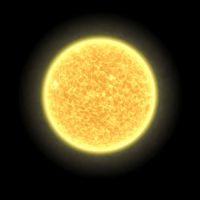
Type Category Mass (Sol) Temperature (K) Luminosity G2 V Main Sequence (Dwarf) 1 5720 - 5770 1 Unit Diameter Safe Distance Habitable Zone Jump Shadow M-Drive Limit AU 0.0094 0.0829 0.95 - 1.68 0.94 9.4 Orbit # * * 4 3 7 Remarks Sol


System Data
Jupiter is categorised as a large gas giant.
Ganymede, the third major moon of Jupiter and the largest moon in the solar system, was once a major Terran colony. It was abandoned early in the Rule of Man period.
- Ganymede also houses the Zeus Institute, a branch of the University of Terra devoted to gas giant studies.
Callisto is the fourth major moon of Jupiter and the third largest moon in the solar system. It was the site of the Byahnn Research Facility, a major Confederation military laboratory located deep beneath its ice.
- The base was captured intact in a Marine Commando raid during the Invasion of Terra and is now operated by Naval Intelligence.
- Callisto is also an Imperial Navy fighter and system defense boat base.
Mainworld Data
Jupiter orbits Sol at a mean distance of 5.2 AU (778.5 million km) and has an orbital period of 11 years 315 days. It has a diameter of 139,822 km, a mean density of 1.33 g/cm³, and a surface gravity of 2.53 G. The world has a complex layered internal structure: its surface is defined as the point within the atmosphere where the mean pressure equals one bar (760.0 mm Hg).
Core
The core of the world has a diameter of approximately 32,000 km and is primarily composed of heavy elements such as nickel (Ni) and iron (Fe), and substantial concentrations of silicates (SiO 4–). It also contains large quantities of superionic hydrogen (H2) and helium (He), as well as trace amounts of radioactives such as thorium (Th) and uranium (U). The core temperatures exceed 20,000°C and pressures exceed 40 megabars. The world is still contracting as part of its formation process: as it contracts the gravitational energy of material falling towards the center releases heat, contributing to the high internal temperatures.
Mantle
Above the core regions is a dense mantle with a diameter of approximately 135,000 km. It is composed of approximately 75% hydrogen (H2), more than 24% helium (He), and less than 1% methane (CH4), ammonia (NH3) and other trace substances: the hydrogen and helium within the lower third of the mantle is in a liquid metallic phase and is electrically conductive. At higher levels these elements transition into liquid phases until the point where the pressure falls to around two megabars, where they begin to transition into atomic gases. Temperatures within the mantle decrease with altitude, dropping to as low as -160°C at the outer transition layers.
- Jupiter rotates rapidly, roughly once every 9.9 hours. The rapid spinning causes powerful electrical currents within the metallic hydrogen layers that drive the planet's magnetic fields.
Deep Atmosphere
Above the mantle is the deep atmosphere, composed of 90% atomic hydrogen (H2), 10% helium (He), and trace quantities of methane (CH4), carbon monoxide (CO), ammonia (NH3), hydrogen peroxide (H2O2), ammonia hydrosulfide (H5NS) and various other gases. The deep atmosphere has an approximate depth of 2500 km and experiences pressures that range from 2 megabars at the deepest levels to 1 bar of pressure at its upper levels, the region considered to be the surface of the world. Temperatures range from -160°C at the transition zone to around -100°C at the surface. The deep atmosphere is turbulent, with constant high-velocity winds.
- Within the deep atmosphere the lowest layers of clouds are made up of salts of perovskite (CaTiO3) and corundum (Al2O3).
- Mid-level deep clouds are composed of lithium fluoride (LiF), sodium sulfide (Na2S), and Lithium sulfide (Li2S).
- High level deep clouds (also occuring within the lower troposphere) are composed of calcium chloride (CaCl2), rubidium chloride (RbCl2), and potassium chloride (KCl).
Upper Atmosphere
The surface regions have a mean atmospheric pressure of 1 bar and consist of 90% hydrogen, 10% helium, and trace amounts of methane (CH4), carbon monoxide (CO), ammonia (NH3), and other trace gases.
Troposphere
The troposphere extends from the surface to an altitude of approximately 50 km, where the mean atmospheric pressure equals approximately 0.1 bar. Temperatures are around -100°C within the surface regions and fall to as low as -160°C within its upper levels.
- The upper cloud layers consist of ammonium hydrosulfide ( (NH4)HS) and condensed ammonia (NH3), which form the world's distinctive red and white bands respectively. The colder white bands are known as zones, while the darker red ones are belts. Gases within the zones rise, while within the belts they fall. When these opposing flows interact, storms and turbulence appear.
- The troposphere also contains dense clouds of water vapor (H2O).
Stratosphere
The stratosphere extends from around 50 km to around 320 km and is characterised by elevated levels of methane (CH4). Temperatures within the lower stratosphere are around -160°C and climb to around -100°C within its upper levels.
- under certain conditions hydrocarbon hazes made up of substances such as acetylene (C2H2), ethane (C2H6) and benzene (C6H6) may form.
Thermosphere
The thermosphere lies above the stratosphere. It extends to an approximate altitude of 1,000 km and has pressures ranging from 0.1 bar to approximately 0.01 bar. Temperatures within it rise from approximately -100° to around 725°C.
- The thermosphere is heated by particles from the magnetosphere and by energy radiating from the sun. This can cause it to emit a weak light known as airglow that keeps the night sky from becoming completely dark.
- The northern and southern polar aurora occur within the thermosphere.
Exosphere
The outermost layer of Jupiter's atmosphere is the exosphere. It is considered to start at an altitude of approximately 1,000 km, where the mean air pressure equals approximately 0.01 bar. It has no clear upper boundary. Temperatures within the exosphere fall rapidly with altitude.
- Gas particles bleed from the exosphere into interstellar space.
Magnetosphere
No information yet available.
Weather Systems
No information yet available.
Surface Features
No information yet available.
Great Red Spot
No information yet available.
Native Lifeforms
No lifeforms are known to exist within Jupiter.
History & Background / Dossier
During the early stages of the Solomani Rim War, fierce battles were fought in Jupiter's upper atmosphere and dark rings between Imperial ships and Solomani Confederation system defense boats.
Imperial High / Landed Nobility
Only the mainworld of a system possesses an officially appointed or landed Imperial Noble.
World Starport
Jupiter has a Class F Spaceport, a good quality secondary installation for handing expected in-system traffic. It can supply amenities like brokerage services for passengers and cargo and refined fuel. There is a shipyard capable of doing annual maintenance, overhauls and most kinds of repair, and construction of non-starships. Spaceports usually consist of a Downport.
World Technology Level
Jupiter possesses a Technology Level of TL–12 or TL-C in Hexadecimal Notation.
- Common Communication technologies for this TL include: Holovision, Personal Global Communications, and advanced Translators.
- Common Power Generation technologies for this TL include: Increasingly advanced fusion plants and advanced fuel cells.
- Common Transportation technologies for this TL include:
- Land, Water & Air: Personal G-Tubes and advanced gravcraft.
- Space: Advanced interplanetary spacecraft (System Craft).
- FTL: Jump Drive-3.
World Government
Jupiter has a Captive Government or Colony. The world is ruled by an external government, there is no self-rule. This is a colony or conquered area. The local government is an oligarchy appointed by, and answerable only to, the external government.
World Military
No information yet available.
World Economy
No information yet available.
Trade Data
No information yet available.
World Demographics
No information yet available.
World Culture
No information yet available.
Historical Data
No information yet available.
World Timeline
No information yet available.
UWP Listing
No information yet available.
References & Contributors (Sources)

|
This article is missing content for one or more detailed sections. Additional details are required to complete the article. You can help the Traveller Wiki by expanding it. |
- Classic Traveller Signal GK (book)
- Citation Missing - Solomani (Alien Module) (Alien Module 6: Solomani)
- John Harshman. The Solomani Rim (Game Designers Workshop, 1982), TBD. (Supplement 10)
- Citation Missing - Alien - Vilani & Vargr (dotmap provided)
- Periodical: MegaTraveller Travellers' Digest No. 13 in Article: "The Trouble With Kids"
- Kevin Knight. Traveller Chronicle 10 (Sword of the Knight Publications, 1996), TBD.
- Kevin Knight. Traveller Chronicle 11 (Sword of the Knight Publications, 1996), TBD.
- Kevin Knight. Traveller Chronicle 12 (Sword of the Knight Publications, 1997), TBD.
- Periodical: MegaTraveller Travellers' Digest No. 13
- Citation Missing - GURPS Traveller: Rim of Fire (GURPS Traveller: Rim of Fire: The Solomani Rim Sourcebook) (world data only)
- GURPS Traveller: Interstellar Wars
- Mongoose Traveller: Solomani Rim
- Author & Contributor: Lord (Marquis) and Master of Sophontology Maksim-Smelchak of the Ministry of Science
- ↑ "Jump Map API" and map location from Travellermap.com