Emur (Mv 0940) (world)

| Emur/Talokan Void (Mavuzog 0940) | |||||||||||||||||||||||||
| Classic Era (1116) | C446774-7
| ||||||||||||||||||||||||
| See also | UWP | ||||||||||||||||||||||||
| System Details | |||||||||||||||||||||||||
| Primary | K6 V M9 VI K7 V | ||||||||||||||||||||||||
| Planetoid Belts | 1 | ||||||||||||||||||||||||
| Gas Giants | 1 | ||||||||||||||||||||||||
Emur is an agricultural world with the potential to become an industrial power.
- As an agricultural world, this world is a near-ideal environment for producing quality foodstuffs of plant, animal, and other forms. Quality foodstuffs are a major export commodity for this world.
- As a preindustrial world, this planet cannot yet manufacture enough high-technology resources to support a modern, star-faring society. Having to import many manufactured and high tech goods drives the price up for these items at this world.
- It is a Non-Aligned world dominated by human sophonts located in the Talokan Void Subsector of Mavuzog Sector.
- This world is a "Twilight Zone World", a planet that is tidally-locked to its star. It has a hot side that permanently faces the star, a cold side that permanently faces away, and a narrow twilight zone in-between.
- It is a balmy tropical world, with a climate of high temperatures.
- Roughly 70% of the population is made up of baseline humans.
- About 20% of the population is composed of Chacinti.
- Around 10% of the population consists of Chirpers.
Description (Astrography & Planetology)[edit]
Stellar Data[edit]
Emur is a trinary star system.
- The primary is an orange main sequence.
- The secondary is a red subdwarf.
- The primary and the secondary are close companions.
- The tertiary is an orange main sequence.
Emur has three stars in the star system. Primary 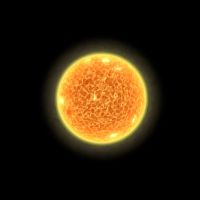
Type Category Mass (Sol) Temperature (K) Luminosity K6 V Main Sequence (Dwarf) 0.69 4100 - 4300 0.27288 Unit Diameter Safe Distance Habitable Zone Jump Shadow M-Drive Limit AU 0.0062 0.0433 0.53 - 0.99 0.62 6.2 Orbit # * * 2 2 6 Remarks Secondary 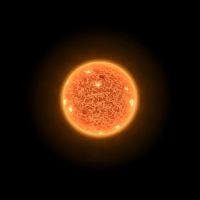
Type Category Mass (Sol) Temperature (K) Luminosity M9 VI Main Sequence (Subdwarf) 0.058 1900 - 2400 0 Unit Diameter Safe Distance Habitable Zone Jump Shadow M-Drive Limit AU 0.00049 0.00064 0.01 - 0.01 0.049 0.49 Orbit # * * * * 1 Remarks Approximately 0.03 AU from the primary. Tertiary
Type Category Mass (Sol) Temperature (K) Luminosity K7 V Main Sequence (Dwarf) 0.64 3990 - 4100 0.20972 Unit Diameter Safe Distance Habitable Zone Jump Shadow M-Drive Limit AU 0.0059 0.038 0.47 - 0.88 0.59 5.9 Orbit # * * 2 2 6 Remarks Approximately 85 AU from the primary-secondary binary pair.


System Data[edit]
The worlds of the system have been surveyed. They consist of:
- The mainworld, orbiting the primary-secondary close binary pair.
- x10 secondary rocky worlds. Four orbit the primary-secondary close binary pair, six orbit the tertiary star.
- x1 planetoid belt. It orbits the primary-secondary close binary pair.
- x1 gas giant. It orbits the primary-secondary close binary pair.
Mainworld Data[edit]
Emur orbits within the prime region of the primary-secondary binary pair's combined habitable zone.
- It receives moderate levels of stellar energy.

It has a slow rotation period: one local day is equivalent to 2.5 standard days (60 standard hours).[2]
Mainworld Size (S)[edit]
Emur is a Meso World between 5,600km and 7,200km in diameter. The world has low gravity between 0.32G and 0.46G. The horizon will appear about 3.6km away.
Mainworld Atmosphere (A)[edit]
Emur has a pressure of 0.43 to 0.70 atmospheres. While the thin atmosphere does not require survival gear this atmosphere also contains an unusual taint such as disease, a hazardous gas mix, pollutants, or sulfur compounds which requires the use of a Filter Mask. Some taints may require more protective equipment. TL–3 or more advanced survival gear is required to settle this world.
- It experiences relatively high temperatures.
- Greenhouse gases in the atmosphere push up the world's surface temperatures.
Mainworld Hydrosphere (H)[edit]
Emur has 55-65% of its surface covered by liquid water. It has significant large liquid bodies. Wilderness refueling is possible.

Mainworld Geography and Topography[edit]
No centrally held map of the world exists within AAB Library Data records.
- Locally, detailed maps may be available.

(Placeholder chart, predominantly watery world.)
Native Lifeforms[edit]
Abundant native life occupying every available ecological niche. Its metabolic functions drive the process of atmospheric renewal.
History & Background (Dossier)[edit]

Note that social data, though only 40 years old, may be out of date.
- Verified updated data is constantly sought.
World Starport (St)[edit]
Emur has a Class C Starport, an average quality installation which features amenities including unrefined fuel for starships, some brokerage services for passengers and cargo, and a variety of ship provisions. There is a shipyard capable of doing maintenance and other kinds of repair. Ports of this classification generally have only a downport, unless this is a trade port or system with an hostile environment mainworld.
World Population (P)[edit]
Emur has a population of 50,000,000 sophonts (tens of millions).

World Demographics[edit]
World Languages[edit]
- Anglic (Riftian dialect)
- Chacinti languages
Urbanization[edit]
Multiple large urban centers are surrounded by smaller satellite communities.
- Inhabited areas are dotted around the twilight zone.
- Cities are connected by road and rail networks.
- Large regions of the surface of the world remain as wilderness.
World Technology Level (T)[edit]
Emur possesses a Technology Level of TL–7.
- Common Communication technologies for this TL include: Early video and early satellite communication networks.
- Common Power Generation technologies for this TL include: Early fuel cells, solar energy, and geothermal power sources.
- Common Transportation technologies for this TL include:
- Land: Improved automobiles, hovercraft, and bullet trains.
- Water: Hydrofoils and early triphibians.
- Air: Hang gliders and supersonic jets.
- Space: Deep space probes and interplanetary spacecraft (System Craft).
World Government (G)[edit]
Emur has a Balkanized Government. There is no central world government. The world has several governments competing for control of the world. These may be allies, cooperating, competitors, or at war with each other.
World Military[edit]
Approximately 250,000 personnel.
- Each nation-state maintains its own standing army.
World Law (L)[edit]
Emur has a moderate law level with laws covering many areas of government and interaction. These laws are simple enough that most people can act as their own advocate, though for serious issues a professional is recommended. Law enforcement officials will be present, but not in great numbers. Light assault weapons, and anything more destructive, are typically regulated or prohibited.
World Economy[edit]
- Resources: 6 (few)
- Labor: 6 (millions)
- Infrastructure: 8 (generally available)
- Efficiency: +1 (average)
Trade Data[edit]
Importance: 0 (ordinary)
The world hosts a commercial operations base for the Talokan Trade Authority.
- The site includes a private spaceport.
- The facility is guarded by corporate security.
World Culture[edit]
- Homogeneity: 9 (discordant)
- Acceptance: 7 (aloof)
- Strangeness: 5 (distinct)
- Symbols: 5 (concrete)
World Timeline[edit]
- 300-420: the First Survey charts the system.
- 995-1065: the Second Survey charts the system.
- 1065: the Second Survey is published.
References & Contributors / Sources[edit]
| This article has metadata. |
- Classic Traveller Group One Theta Borealis Sector
- Traveller Wiki Editorial Team
- Author & Contributor: Lord (Marquis) and Master Scout Emeritus Adie Alegoric Stewart of the IISS
- Author & Contributor: Lord (Marquis), Captain, and Lead Naval Architect Ronald B. Kline, Jr. of the Imperial Navy
- Author & Contributor: Lord (Marquis) and Master of Sophontology Maksim-Smelchak of the Ministry of Science
- ↑ "Jump Map API" and map location from Travellermap.com
- ↑ Editor's note: Emur is noted as being a Twilight Zone World. Due to the nature of both its star and the world itself this has instead been changed to a slow rotation period.