Difference between revisions of "Paria (world)"
| Line 37: | Line 37: | ||
=== (Ib) Paria === | === (Ib) Paria === | ||
| − | (Ib) Paria is the outer of the two major moons of (I) Bordo and is designated as the [[mainworld]]. Paria orbits its parent world at a mean distance of 20 diameters (662,000 km), with an orbital period of 43 days 7 hours and a rotation period of 86 hours. It has an axial tilt of 3 degrees. It has a diameter of 4,732 km, a density of 4.21 g/cm³ and a surface gravity of 0.28 G. Tidal stresses caused by the gravitational pulls of both Bordo and Lyone cause frequent seismic activity. It retains an atmosphere rated as Thin, Tainted, with a surface pressure of 0.32 bar and a composition of 76% nitrogen, 14% oxygen, 8% carbon dioxide, 1% argon, and 1% neon, carbon monoxide and other trace gases. The atmospheric taint is caused by the high percentage of carbon dioxide and by relatively high levels of background radiation. Around | + | (Ib) Paria is the outer of the two major moons of (I) Bordo and is designated as the [[mainworld]]. Paria orbits its parent world at a mean distance of 20 diameters (662,000 km), with an orbital period of 43 days 7 hours and a rotation period of 86 hours. It has an axial tilt of 3 degrees. It has a diameter of 4,732 km, a density of 4.21 g/cm³ and a surface gravity of 0.28 G. Tidal stresses caused by the gravitational pulls of both Bordo and Lyone cause frequent seismic activity. It retains an atmosphere rated as Thin, Tainted, with a surface pressure of 0.32 bar and a composition of 76% nitrogen, 14% oxygen, 8% carbon dioxide, 1% argon, and 1% neon, carbon monoxide and other trace gases. The atmospheric taint is caused by the high percentage of carbon dioxide and by relatively high levels of background radiation. Around 10% of the surface is covered in a dense crust of ice and around 6% is covered lakes and seas of water, primarily kept liquid by geothermal activity: average tidal ranges are around 0.5m. Mean surface temperature: -30°C. The atmosphere is relatively active and strong winds scour the surface of the world. The climate is static and weather patterns, driven by convection, follow predictable patterns during the local year. |
==== Mainworld geography and topography ==== | ==== Mainworld geography and topography ==== | ||
Revision as of 08:31, 24 November 2017
This is a world-system under construction and is currently being input-programmed into the Traveller RPG Wiki.
| Paria/Natar (Far Home 0316) | |||||||||||||||||||||||||
| Classic Era (1116) | E342688-4
| ||||||||||||||||||||||||
| See also | UWP | ||||||||||||||||||||||||
| System Details | |||||||||||||||||||||||||
| Primary | M5 V | ||||||||||||||||||||||||
| Planetoid Belts | 2 | ||||||||||||||||||||||||
| Gas Giants | 4 | ||||||||||||||||||||||||
Paria is a poor, nonindustrial hellworld with a population struggling to survive in an inhospitable environment.
- Hellworlds often offer daily, and sometimes even hourly, life-threatening situations to their inhabitants. Survivors often develop intense survival skills and tend to be grim realists.
- It requires extensive imports of outside technology to maintain a modern, star-faring society.
- This is a "low technology" world with technology competencies well below standard for Charted Space.
- It is a Non-Aligned world dominated by human sophonts located in the Natar Subsector of Far Home Sector.
Astrography and Planetology
No information yet available.
Paria has a solitary primary star. Paria 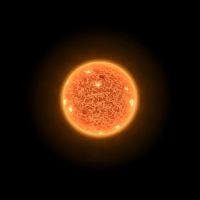
Type Category Mass (Sol) Temperature (K) Luminosity M5 V Main Sequence (Dwarf) 0.162 2930 - 3060 0.00171 Unit Diameter Safe Distance Habitable Zone Jump Shadow M-Drive Limit AU 0.0018 0.0034 0.04 - 0.09 0.18 1.8 Orbit # * * * 0 4 Remarks


System data
The primary is Lyone, an ordinary red main sequence star. It has a luminosity of 0.007 Sols, a mass of 0.331 Sols and a diameter of 498,000 km. (I) Bordo, a small gas giant; (Ib) Paria is its outer moon and is designated the mainworld, (II) a rocky exotic atmosphere world, (III) a large ringed gas giant, (IV) a sparse rocky planetoid belt, (V, VI) two small gas giants, (VII, VIII) two rocky vacuum worlds, and (IX) a sparse icy planetoid belt form the outer system. All of the gas giants retain families of satellites.
(I) Bordo
(I) Bordo is a small gas giant that orbits Lyone at a mean distance of 0.19 AU (28.4 million km) and has an orbital period of 52 days 12 hours. It has a diameter of 33,000 km and is a pale green colour. It retains a family of two major satellites of which the outer, (Ib) Paria, is designated the mainworld. Large pale clouds form in the temperate regions and are dragged into long white bands by high speed winds.
(Ib) Paria
(Ib) Paria is the outer of the two major moons of (I) Bordo and is designated as the mainworld. Paria orbits its parent world at a mean distance of 20 diameters (662,000 km), with an orbital period of 43 days 7 hours and a rotation period of 86 hours. It has an axial tilt of 3 degrees. It has a diameter of 4,732 km, a density of 4.21 g/cm³ and a surface gravity of 0.28 G. Tidal stresses caused by the gravitational pulls of both Bordo and Lyone cause frequent seismic activity. It retains an atmosphere rated as Thin, Tainted, with a surface pressure of 0.32 bar and a composition of 76% nitrogen, 14% oxygen, 8% carbon dioxide, 1% argon, and 1% neon, carbon monoxide and other trace gases. The atmospheric taint is caused by the high percentage of carbon dioxide and by relatively high levels of background radiation. Around 10% of the surface is covered in a dense crust of ice and around 6% is covered lakes and seas of water, primarily kept liquid by geothermal activity: average tidal ranges are around 0.5m. Mean surface temperature: -30°C. The atmosphere is relatively active and strong winds scour the surface of the world. The climate is static and weather patterns, driven by convection, follow predictable patterns during the local year.
Mainworld geography and topography
Total surface area: 70 million km², Land surface area: 59 million km², Liquid water surface area: 4 million km², Ice coverage 7 million km².
Native lifeforms
Paria has abundant though primitive native life, largely consisting of microscopic but specialised organisms. Its metabolic functions power the process of atmospheric renewal.
History & Background (Dossier)
No information yet available.
World starport
Paria has a Class E Starport, a frontier quality installation with few expected amenities. There is unrefined fuel for starships and a limited variety of ship provisions. There is no shipyard of any kind, but there may be parts and technical support for doing minor services and repair. Ports of this classification generally consist of a downport.
World technology level
Paria possesses a Technology Level of TL–4.
- Common Communication technologies for this TL include: Telephone and telegraphs, widespread printing.
- Common Power Generation technologies for this TL include: Early electricity, hydrocarbon internal combustion.
- Common Transportation technologies for this TL include:
- Land: Trains and early automobiles.
- Water: Clippers and steam ships.
- Air: Dirigibles, balloons, very basic rockets.
World government
Paria is governed by a Civil Service Bureaucracy. The leadership of the government takes another form (democracy, dictatorship, oligarchy), but the bureaucracy leadership influences policy. The government leadership may select the bureaucracy leadership, but not its membership. Usually the governmental leadership is divided, or incapable of setting policy, and the bureaucracy provides a stabilizing influence. This ruling bureaucracy may be the full government bureaucractic apparatus or a section with limited jurisdiction but considerable influence, like the military.
World military
No information yet available.
World economy
No information yet available.
Trade data
No information yet available.
World demographics
No information yet available.
World culture
No information yet available.
Historical data
No information yet available.
World timeline
No information yet available.
UWP listing
No information yet available.
References & Contributors / Sources

|
This article is missing content for one or more detailed sections. Additional details are required to complete the article. You can help the Traveller Wiki by expanding it. |
- Author & Contributor: Lord (Marquis) and Master Scout Emeritus Adie Alegoric Stewart of the IISS
- Author & Contributor: Lord (Marquis) and Master of Sophontology Maksim-Smelchak of the Ministry of Science
- ↑ "Jump Map API" and map location from Travellermap.com