Difference between revisions of "Greater Shell Nebula"
| Line 7: | Line 7: | ||
* It is classified as a reflection nebula and is primarily formed of ionized gases, thrown off by the [[star]]s at its center many millennia ago. | * It is classified as a reflection nebula and is primarily formed of ionized gases, thrown off by the [[star]]s at its center many millennia ago. | ||
| − | * The gases consist of about 90% hydrogen (H<sub><small>2</small></sub>), with the remainder made up of helium (He), oxygen (O<sub><small>2</small></sub>), nitrogen (N<sub><small>2</small></sub>), and other elements. The clouds have a mean density of 10<sup><small>–6</sup> particles/cm³. Its central regions are relatively denser. | + | * The gases consist of about 90% hydrogen (H<sub><small>2</small></sub>), with the remainder made up of helium (He), oxygen (O<sub><small>2</small></sub>), nitrogen (N<sub><small>2</small></sub>), and other elements. The clouds have a mean density of 10<sup><small>–6</small></sup> particles/cm³. Its central regions are relatively denser. |
A trinary star systems lie at its core: | A trinary star systems lie at its core: | ||
Revision as of 19:58, 20 January 2019

The Greater Shell Nebula is a reflection nebula located in the central part of Coro Sector, within the Empty Stars.
- It is an astrographic feature and a nebula.
Description (Specifications)
The Greater Shell Nebula is a large dim group of gases and dark clouds measuring around 7 parsecs coreward-rimward by around 6 parsecs spinward-trailing. The nebula has a large "tail" extending for nearly 5 parsecs to rimward.
- It is classified as a reflection nebula and is primarily formed of ionized gases, thrown off by the stars at its center many millennia ago.
- The gases consist of about 90% hydrogen (H2), with the remainder made up of helium (He), oxygen (O2), nitrogen (N2), and other elements. The clouds have a mean density of 10–6 particles/cm³. Its central regions are relatively denser.
A trinary star systems lie at its core:
GSN1-abc has three stars in the star system. GSN1-abc 
Type Category Mass (Sol) Temperature (K) Luminosity A4 II Bright Giant 11.6 8200 - 8800 1120 Unit Diameter Safe Distance Habitable Zone Jump Shadow M-Drive Limit AU 0.13771 2.77584 26.61 - 43.37 13.771 137.71 Orbit # 0 5 9 7 11 Remarks None GSN1-abc 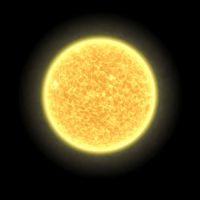
Type Category Mass (Sol) Temperature (K) Luminosity G1 V Main Sequence (Dwarf) 1.03 5770 - 5860 1.109 Unit Diameter Safe Distance Habitable Zone Jump Shadow M-Drive Limit AU 0.0099 0.0873 1 - 1.75 0.99 9.9 Orbit # * * 4 3 7 Remarks None GSN1-abc 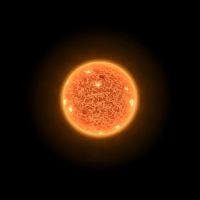
Type Category Mass (Sol) Temperature (K) Luminosity M1 V Main Sequence (Dwarf) 0.5 3620 - 3660 0.08839 Unit Diameter Safe Distance Habitable Zone Jump Shadow M-Drive Limit AU 0.0047 0.0247 0.31 - 0.59 0.47 4.7 Orbit # * * 1 1 6 Remarks None


Hex Location: 1007 Coro Sector. 2 Gas Giants.
History & Background (Dossier)
The positions and types of the stars present within the Greater Shell Nebula have been cataloged as part of the University of Selasia Spinward Survey. The nebula is named for its twisted conical shape, supposedly resembling a large seashell.
Image Repository
Worlds & Sectors (Astrography)
This astrographic feature is primarily found in the following areas:
Charted Space:
World Listing: 1105
The following systems and worlds are associated with this astrographic feature:
References & Contributors (Sources)

|
This article is missing content for one or more detailed sections. Additional details are required to complete the article. You can help the Traveller Wiki by expanding it. |
- Traveller Wiki Editorial Team
- Author & Contributor: Lord (Marquis) and Master Scout Emeritus Adie Alegoric Stewart of the IISS
- Author & Contributor: WHULorigan
- Author & Contributor: Lord (Marquis) and Master of Sophontology Maksim-Smelchak of the Ministry of Science