Cipango (system)
The Cipango system is a star system.
- It consists of a central star, its family of worlds, and their various moons.
- The system's mainworld is Cipango.
| Cipango System | |||
| Cronor/Spinward Marches 0705 | |||
| Position | Distance | Name | UWP |
| Primary | 'Cipango-Taiyoo' | 'G2V' | |
| 1 | 0.5 AU | Zero-Belt | Y000000-0 |
| 2 | 0.7 AU | Himawari | HS00000-0 |
| 3 | 0.9 AU | Kusai | F596267-C |
| 4 | 1.1 AU | Cipango | A886865-C |
| 1 | 2 | * Yubiwa-Ring' | YR00000-0 |
| 2 | 25 | * Tsuki-Shivva' | F646668-C |
| 5 | 1.5 AU | Yon-Belt | G000268-C |
| 6 | 2.3 AU | Doitsu | H7A0167-B |
| 1 | 12 | * Bavaria-32' | H100363-B |
| 7 | 7.1 AU | Fukuzawa | Small GG |
| 1 | 8 | * F-8' | HS00167-B |
| 2 | 11 | * F-11 prim' | HS00000-0 |
| 3 | 11 | * F-11 bis' | HS00163-B |
Description (Astrography & Planetology)[edit]
Stellar Data[edit]
They Cipango system has a solitary primary star.
- It is a yellow main sequence named Cipango-Taiyoo.
Cipango has a solitary primary star. Cipango-Taiyoo 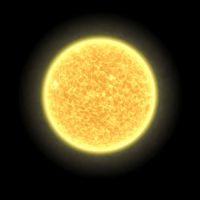
Type Category Mass (Sol) Temperature (K) Luminosity G2 V Main Sequence (Dwarf) 1 5720 - 5770 1 Unit Diameter Safe Distance Habitable Zone Jump Shadow M-Drive Limit AU 0.0094 0.0829 0.95 - 1.68 0.94 9.4 Orbit # * * 4 3 7 Remarks

System Data[edit]
The worlds of the system have been surveyed. They consist of:
- The mainworld.
- x6 secondary rocky worlds. The inner three are a large inner system planetoid named Himawari, tropical Kusai, and tiny Doitsu, lying beyond Cipango's orbit. Three additional unnamed frozen worlds orbit in the far outer system.
- x2 planetoid belts, named the Zero-Belt, orbiting close to the star, and the Yon-Belt, lying between Cipango and Doitsu.
- x1 gas giant, named Fukuzawa. It orbits beyond Doitsu, in the outer system.
- It retains a family of three moons.
The Cipango system is not very impressive, but it still has three garden worlds: Kusai, Cipango itself, and Tsuki-Shivva, Cipango's moon.
Kusai orbits within the inner part of the habitable zone. Its climate is a little too hot for human comfort, the atmosphere has a foul smell, and there is dangerous local wildlife, so it has not attracted a large population. It orbits within the star's Jump Shadow, so it is rarely visited by interstellar traders.
Cipango itself has a large moon, Tsuki-Shivva, which has been colonized. It is considered a fairly nice place that has a cooler climate than Cipango itself. Most of the new colonists from the Consulate have settled here.
History & Background (Dossier)[edit]
Fukuzawa, the system's solitary gas giant, has three moons. These are F-8 (the innermost, orbiting at 8 radii,) and the twin moons of F-11 prim and F-11 bis (both orbiting at 11 radii, but with 60 degrees separation between them). All three are cold, airless chunks of rock.
References & Contributors (Sources)[edit]
- Marc Miller. The Spinward Marches (Game Designers Workshop, 1979), 4-5.
- Marc Miller. The Spinward Marches Campaign (Game Designers Workshop, 1985), 18-19.
- Marc Miller. Imperial Encyclopedia (Game Designers Workshop, 1987), 94-100. (UWP only)
- Rob Caswell. "Domain of Deneb: Sector Data." MegaTraveller Journal 3 (1992): 47-58. (UWP only)
- Dave Nilsen. The Regency Sourcebook (Game Designers Workshop, 1995), 36. (UWP only)
- Martin Dougherty, Neil Frier. Behind the Claw (Steve Jackson Games, 1998), 41.
- Mike West. The Spinward States (Avenger Enterprises, 2008), 98. (UWP only)
- Martin Dougherty. The Spinward Marches (Mongoose Publishing, 2008), .
- Martin Dougherty. Behind the Claw (Mongoose Publishing, 2019), 26.
- P-O "BeRKA" Bergstedt - Cipango Landgrab & Cipango System